Sewing Your Own Clothes With Handwoven Wool Fabric

'But does it fray?' is one of the most common worries that I hear from weavers when we discuss sewing with our own handwoven fabric. I think we all look at the length of handwoven cloth for the first time and feel the concern about ruining it. Handwoven fabric represents hours of work, it isn't cheap, and it doesn't come with a spare yard in case we get the cut wrong! I completely understand the hesitation as I myself have paused and spent many days looking at a piece of fabric before finally building up the confidence to start sewing with it.
I weave predominantly with fine merino lambswool fabric and will often sew with the finished woven fabric. This blog discusses the weaving and creation of a merino wool gilet and outlines a few hints and tips in case you would like to start sewing with your own handwoven fabric.

Creating a Merino Lambswool Gilet from Handwoven Fabric
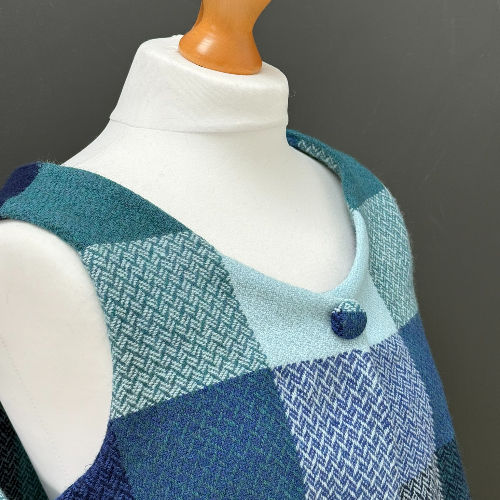
For the project outlined in this blog I was creating a merino lambswool gilet from handwoven fabric. The fabric that I chose was woven with fine 2/17nm merino lambswool on a floor loom using a large check design with the smaller 8 shaft pattern within.

I chose to use the 'Gertrude Gilet' by Sewgirl as the basic pattern with a little modification around the neck line with omission of the pockets. I have used patterns by Sewgirl before and find them great. I was particularly attracted to this pattern because it wasn't lined and would allow me to create a fine fitted gilet. You can find the pattern here: Sewgirl patterns.
Why Handwoven Fabric Sews Differently
Commercial fabric is woven on high speed looms under tight and even tension. The fabric is then finished in a way to make it predictable - the same roll behaves in the same way from one end to the other. My handwoven cloth isn't like that, every inch has been passed through my hands, and the tension, the beat of the reed and even the day's humidity can leave a trace in the finished fabric.
This means that handwoven merino lambswool has more give, a subtler drape, and small natural variations in the weave that are part of its character rather than a flaw to fix. When sewing with it, I need to work with those variations which in my opinion makes it harder to sew with than commercially produced fabric.
Preparing the Fabric Before Cutting
My handwoven merino lambswool fabric is gently washed and fulled after weaving before it meets a pair of scissors. This lets the fibres relax and settle into their final dimensions so the finished garment doesn't shrink or distort. Most importantly it allows the interlaced fibres to felt which binds them together creating a fabric which is less likely to fray. Sewing an unwashed woven lambswool fabric would be significantly more challenging than sewing with a finished fabric.

Cutting the Fabric
Merino Lambswool has a soft, slightly fuzzy feel and it can easily shift under the scissors. A few things helped me when creating the gilet:
I used sharp scissors and cut in a single confident motion rather than short snips which could distort the weave.
I pinned generously to secure the pattern pieces to the handwoven cloth
I cut a single layer so that I could see exactly what the weave was doing at every point.

The Fear of the Fray
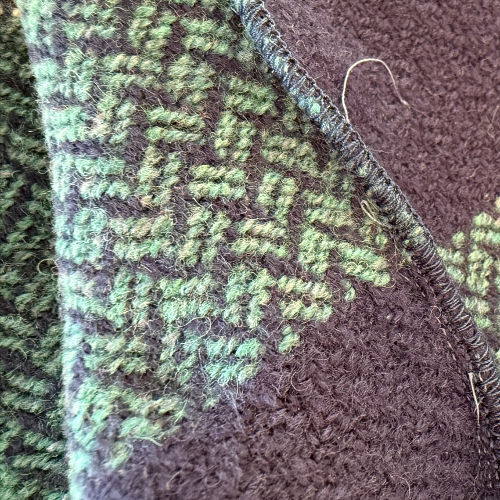
This is real - and for many edges I will overlock or sew a zig zag stitch before sewing. I find that overlocking is best as it not only prevents fraying but gives the edge a little more rigidity which I find helpful when sewing.
Sewing Techniques for Handwoven Fabric
I find the following to be useful tips:
Use a fine sharp needle to avoid snagging the wool fibres
Test on scraps first - every piece of handwoven cloth is a little different, so a quick test seam on an offcut tells you how your machine tensions and whether the stitch length will need to be adjusted for that particular piece.
Lengthen the stitch slightly - a slightly longer straight stitch sits more comfortably with the natural texture of the fabric rather than a tight short stitch.
I undersew (understitch) seams with a long stitch to help the sewn seam sit well on the underside of the garment.
I sometimes stay stitch curved edges - this might not be necessary where I have overlocked but is helpful for necklines and armholes where the fabric could easily distort when sewing.
I hand baste tricky seams - a line of basting stitches before machine sewing helps prevent the layers from shifting.
Finishing Touches
In the gilet documented here I overlocked the edges and hand sewed the seams. This resulted in a less bulky hem and ensured the lining pieces were secured neatly.

Why it is Worth Making the Effort
Sewing with handwoven fabric takes longer than sewing with commercially produced fabric. In my case I think this is perhaps because I have invested so much time in producing the fabric that I don't want to ruin it so I work slowly when sewing. However, the result is a garment or accessory which can not be replicated and is totally unique. For this reason, if you are a weaver with fabric to spare then I would encourage you to have a go. The image below shows the finishing touch of a button covered with some of the handwoven fabric.

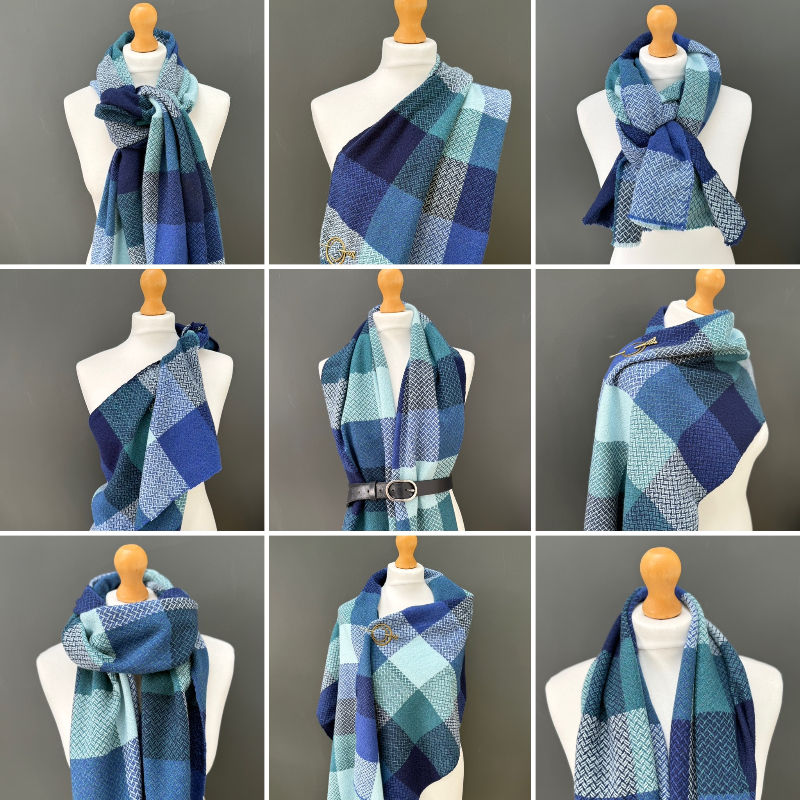
Most of my weaving creates luxury accessories and you can find the full range of handwoven accessories including triangle scarves, shawls, scarves and snoods for delivery within the UK, to Canada and USA here: Shop handwoven scarves, snoods, shawls.
If you are interested in knowing about other blogs, what is on the loom, off the loom, and workshop dates, do sign up to receive my weaving news emails by clicking here.